Your Natural Foot Shape
Look down at your bare foot. Really look at it.
Notice how your toes fan out wider than the ball of your foot? How your big toe points slightly inward, not straight ahead? How your pinky toe has its own independent space?
Now look at a typical dress shoe or sneaker. See the difference? The shoe tapers to a narrow point. Your foot doesn't. That's the problem.
The Anatomy of a Healthy Foot
A healthy human foot is shaped like a triangle — wide at the toes, narrow at the heel:
- Toes spread naturally for balance and propulsion
- Big toe aligns with the inner edge of the foot, not angled inward
- Each toe has space to move independently
- The foot widens under load — when you stand, walk, or run, your foot expands
Conventional shoes do the opposite: narrow at the toes, often with a raised heel. Over years of wear, this reshapes your foot.
What Narrow Shoes Do to Your Feet
When your toes are squeezed into a narrow toe box day after day:
Bunions (Hallux Valgus) — Your big toe is forced inward toward the other toes, creating a painful bony bump at the joint. This affects an estimated 23% of adults.
Hammertoes — Toes that can't lie flat get permanently bent at the middle joint from constant pressure against the shoe upper.
Neuromas — Nerves between the toes get compressed, causing sharp pain, burning, or numbness in the ball of the foot.
Ingrown Toenails — Pressure on the sides of toes forces nails to grow into the surrounding skin.
Reduced Balance — When your toes can't spread, your body's natural balance system is compromised.
⚠️ The scary part: Most of these conditions develop slowly over 10-20 years. You don't notice until the damage is done.
The Three Main Foot Shapes
Podiatrists generally recognize three foot shapes:
1. Egyptian Foot (50% of people)
Big toe is the longest, toes taper down in a straight diagonal line. Needs the most width at the big toe.
2. Greek Foot (20% of people)
Second toe is longer than the big toe. Common in athletes. Needs extra length in the second toe area.
3. Roman/Square Foot (30% of people)
First three toes are roughly equal length. The widest foot shape. Needs a genuinely wide toe box with even space across all toes.
How to Check If Your Shoes Fit
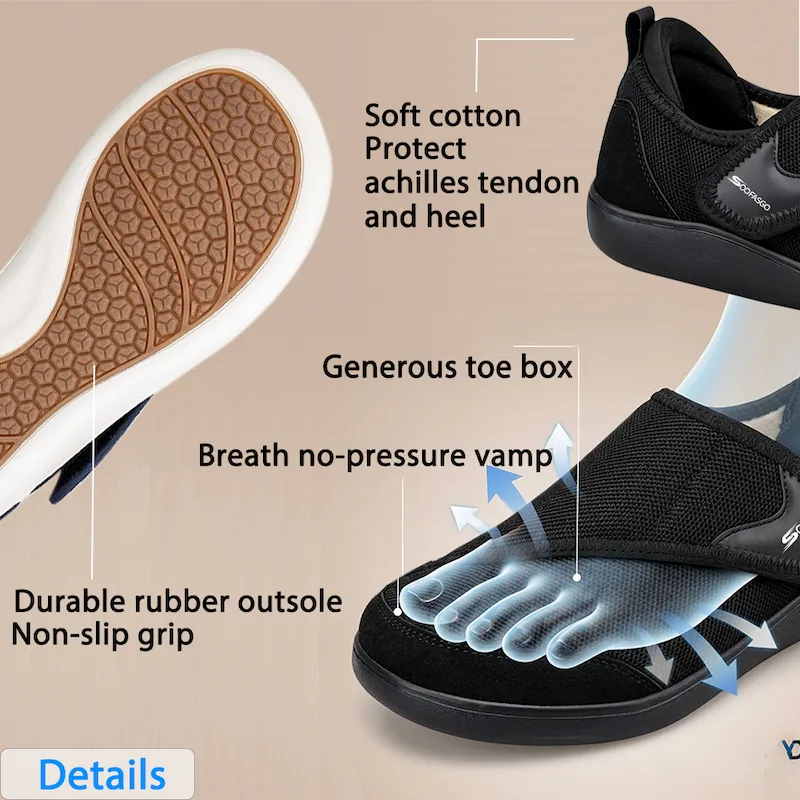
Take the insole out of your shoe and stand on it barefoot. If any part of your foot hangs over the edge — your shoes are too narrow. It's that simple.
Your toes should never touch the front or sides of your shoe when standing. There should be about a thumb's width of space between your longest toe and the shoe tip.
Returning to Your Natural Shape
The good news: your feet can recover. When you switch to a wide toe box shoe:
- Week 1-2: Your toes start to spread. It feels strange at first.
- Month 1-3: Minor toe alignment begins to improve. Balance gets noticeably better.
- Month 6-12: Significant improvement in toe splay. Bunions may not reverse, but pain often decreases because pressure is removed.
Your feet have been in narrow shoes for years. Give them time. The wide toe box is the first step.